
Pendampingan restorasi hukum pernikahan siri pada masyarakat pesisir Tendas di Desa Mojosari Kabupaten Jember

 Abstract views: 383
 PDF downloads: 203
Keywords:
restoration, Unregistered Marriage (Nikah Siri), coastal communityAbstract
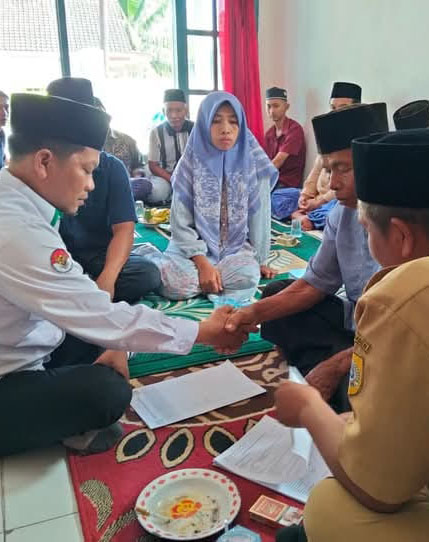
Based on field observation data, 62.96% of the coastal community of Tendas tend to engage in nikah siri (unregistered marriage) due to low awareness of administrative legal requirements. This community service program aims to carry out legal restoration to reduce the negative impacts of nikah siri, while ensuring legal protection and administrative rights for 17 women involved in unregistered marriages and their children. Using a Participatory Action Research (PAR) approach, this program emphasizes the active participation of the Tendas coastal community in addressing issues related to nikah siri. The program's results reveal three main findings. First, the Tendas coastal community is a relatively isolated community that tends to practice nikah siri due to limited understanding of the risks of unregistered marriage, low educational attainment, weak economic conditions, early marriage practices, and conservative and stubborn attitudes. Second, the community service actions were implemented through focus group discussions (FGDs), training on low-cost marriage registration procedures, the establishment of the Sakinah Mawaddah wa Rahmah (SAMAWA) Family Post, and assistance with the isbat nikah (marriage legalization) process. Third, the legal restoration outcomes in the Tendas community encouraged the legalization of unregistered marriages through isbat nikah, enhanced community legal education, and strengthened the roles of traditional and religious leaders in promoting official marriage registration. Overall, this community service program successfully increased legal awareness among the Tendas coastal community and expanded access to administrative protection through legally registered marriages.
[Berdasarkan data observasi lapangan, 62,96% masyarakat pesisir Tendas cenderung melakukan pernikahan siri karena rendahnya kesadaran terhadap hukum administrasi. Pengabdian ini bertujuan melakukan restorasi hukum untuk mengurangi dampak negatif pernikahan siri, sekaligus menjamin perlindungan hukum dan hak administratif bagi 17 perempuan pelaku nikah siri serta anak-anak mereka. Dengan pendekatan Participatory Action Research (PAR), pengabdian ini menekankan partisipasi aktif masyarakat pesisir Tendas dalam menyelesaikan permasalahan nikah siri. Hasil pengabdian menunjukkan tiga temuan utama. Pertama, masyarakat pesisir Tendas merupakan komunitas yang relatif terisolasi dan cenderung melakukan nikah siri akibat kurangnya pemahaman terhadap risiko perkawinan siri, rendahnya tingkat pendidikan, lemahnya kondisi ekonomi, praktik pernikahan dini, serta sikap kolot dan keras kepala. Kedua, aksi pengabdian dilakukan melalui kegiatan focus group discussion (FGD), pelatihan prosedur pencatatan pernikahan berbiaya minimal, pembentukan Posko Keluarga Sakinah Mawaddah wa Rahmah (SAMAWA), serta pendampingan proses isbat nikah. Ketiga, hasil restorasi hukum pernikahan siri di masyarakat Tendas mendorong legalisasi pernikahan melalui isbat nikah, meningkatkan edukasi hukum masyarakat, serta memperkuat peran tokoh adat dan tokoh agama dalam mendorong pencatatan pernikahan secara resmi. Secara keseluruhan, pengabdian ini berhasil meningkatkan kesadaran hukum masyarakat pesisir Tendas serta membuka akses yang lebih luas terhadap perlindungan administratif melalui pencatatan pernikahan yang sah.]
Downloads
References
Adelman, C. (1993). Kurt Lewin and the origins of action research. Educational Action Research, 1(1), 7–24. https://doi.org/10.1080/0965079930010102
Afandi, A. (2022). Metodologi penelitian masyarakat (Suwendi (ed.)). Direktorat Pendidikan Tinggi Keagamaan Islam.
Azizy., A. Q. (2002). Eklektisisme hukum nasional: Kompetisi antara hukum Islam dan hukum umum. Gama Media.
BIP, T. R. (2017). Undang-Undang Republik Indonesia nomor 1 Tahun 1974 (pertama). Bhuana Ilmu Populer.
Cassier, E. (1969). An essay on man: An introduction to a philosophy of human culture. https://doi.org/10.28937/978-3-7873-2037-0
Fauzi, M. L. (2023). Administrative transgression and judicial discretion for the sake of citizens’ rights: The legalisation of unregistered marriages in Indonesia. Al-Ahwal, 16(2), 211–231. https://doi.org/10.14421/ahwal.2023.16202
Gunawan, E., Hakim, B. R., Tohis, R. A., & Mash’ud, I. (2024). Interfaith marriage of North Sulawesi multicultural community in minority fiqh perspective. Al-Ihkam: Jurnal Hukum dan Pranata Sosial, 19(2), 384–412. https://doi.org/10.19105/al-lhkam.v19i2.8072
Huda, M., & Azmi, N. (2020). Legalisasi nikah siri melalui isbat nikah. Jurnal Hukum Keluarga dan Islam, 5(2), 98–119.
Iskandar, D., Zulbaidah, W. N., Almanda, A., & Abdinur, I. (2024). Perkembangan teori dan penerapan asas legalitas dalam hukum pidana Indonesia. JIMMI: Jurnal Ilmiah Mahasiswa Multidisiplin, 1(3), 293–305.
Jumarim, Muhsin, I., & Huda, M. C. (2024). The interplay of fiqh, adat, and state marriage law: Shaping legal consciousness of Sasak women. Al-Ihkam: Jurnal Hukum dan Pranata Sosial, 19(2), 27–52. https://doi.org/10.19105/al-lhkam.v19i1.10522
Kholifah R, E., Widagdo, S., & Maulana, A. (2021). Pendampingan peroleh legalitas usaha mikro di Desa Puger Wetan, Kecamatan Puger, Kabupaten Jember. Jurnal Pengabdian Masyarakat IPTEKS, 7(1), 88–94. https://doi.org/https://doi.org/10.32528/jpmi.v7i1.5266
Kodir, F. A. (2024). Maqāṣid cum-Mubādalah Methodology of KUPI : Centering Women ’ s Experiences in Islamic Law for. Al-Ihkam: Jurnal Hukum dan Pranata Sosial, 19(2), 519–545. https://doi.org/10.19105/al-lhkam.v19i2.16617.
Mardani. (2018). Hukum Islam. Pustaka Pelajar.
Novitasari, A., Rosita, D., & Ayub, M. (2023). Tinjauan Yuridis Pernikahan Siri dari Segi Hukum Perdata dan Hukum Pidana. Jurnal Keadilan Hukum, 4(1), 1–9.
Nurhayati, L. (2022). Pengembangan usaha Badan Usaha Milik Desa (BUMDes) Gunung Mulia berbasis potensi desa di Desa Grenden, Kecamatan Puger, Kabupaten Jember. Univeristas Jember.
Pelu, I. E. A., & Dakhoir, A. (2021). Marital property within the marriage law: A debate on legal position and actual applications. Al-Jami’ah, 59(2), 287–316. https://doi.org/10.14421/ajis.2021.592.287-316
Rahardjo, S. (2011). Hukum Progresif: Hukum yang membebaskan. Jurnal Hukum Progresif, 1.
Rato, D. (2011). Hukum adat (H. Alting (ed.)). LaksBang PRESSindo.
Rohman, H., & Rifqi, M. J. (2024). When the state tackles family law issues: The attitudes of Surabaya and Sidoarjo religious offices on child marriage, sirri marriage, and domestic violence. Al-Ahwal, 17(2), 267–286. https://doi.org/10.14421/ahwal.2024.17207
Saebani, B., & Falah, S. (2011). Hukum Perdata Islam Indonesia (M. Djaliel (ed.); Pertama). CV Pustaka Setia.
Sepyah, S., Hardiyatullah, H., Nuriskandar, L. H., & Jayadi, N. (2022). Konsep hukum Islam mengenai pernikahan siri di Indonesia dan implikasi hukum. AL-BALAD : Jurnal Hukum Tata Negara dan Politik Islam, 2(2), 67–79. https://doi.org/10.59259/ab.v2i2.110
Tony, M. (1996). The evolution of restorative justice in Britain. European Journal on Criminal Policy and Research, 4, 21–43. https://link.springer.com/article/10.1007/BF02736712
Yusmi, Y., Alwi, Z., & Syatar, A. (2022). Pelaksanaan isbat nikah terhadap perkawinan siri. Qadauna: Jurnal Ilmiah Mahasiswa Hukum Keluarga Islam, 3(3), 482–501.
Zulhendra, Joni. (2016). Akibat Hukum Pernikahan Sirri Perspektif Hukum Islam. Normatif, 12(2), 1–23.
Downloads
Published
Issue
Section
License
Copyright (c) 2025 PERDIKAN (Journal of Community Engagement)

This work is licensed under a Creative Commons Attribution-NonCommercial 4.0 International License.
In order for PERDIKAN to publish and disseminate research articles, we need publishing rights. This is determined by a publishing agreement between the author and PERDIKAN. This agreement deals with the transfer or license of the copyright to PERDIKAN and authors retain significant rights to use and share their own published articles. For both subscription and open access articles, published in proprietary titles, PERDIKAN is granted the following rights:
- The right to provide the article in all forms and media so the article can be used on the latest technology even after publication.
- The authority to enforce the rights in the article, on behalf of an author, against third parties, for example in the case of plagiarism or copyright infringement.
Copyright aims to protect the specific way the article has been written to describe an experiment and the results. PERDIKAN is committed to its authors to protect and defend their work and their reputation and takes allegations of infringement, plagiarism, ethic disputes and fraud very seriously.
If an author becomes aware of a possible plagiarism, fraud or infringement we recommend contacting their PERDIKAN publishing contact who can then liaise with our in-house legal department. Note that certain open access user licenses may permit
1.png)