Pendampingan pembuatan Smart-Psychospiritual berbasis edutainment bagi komunitas penulis Katolik Deo Gratias Malang

 Abstract views: 227
 PDF downloads: 190
Keywords:
psikospiritualitas, edutainment, literasi digital, komunitasAbstract
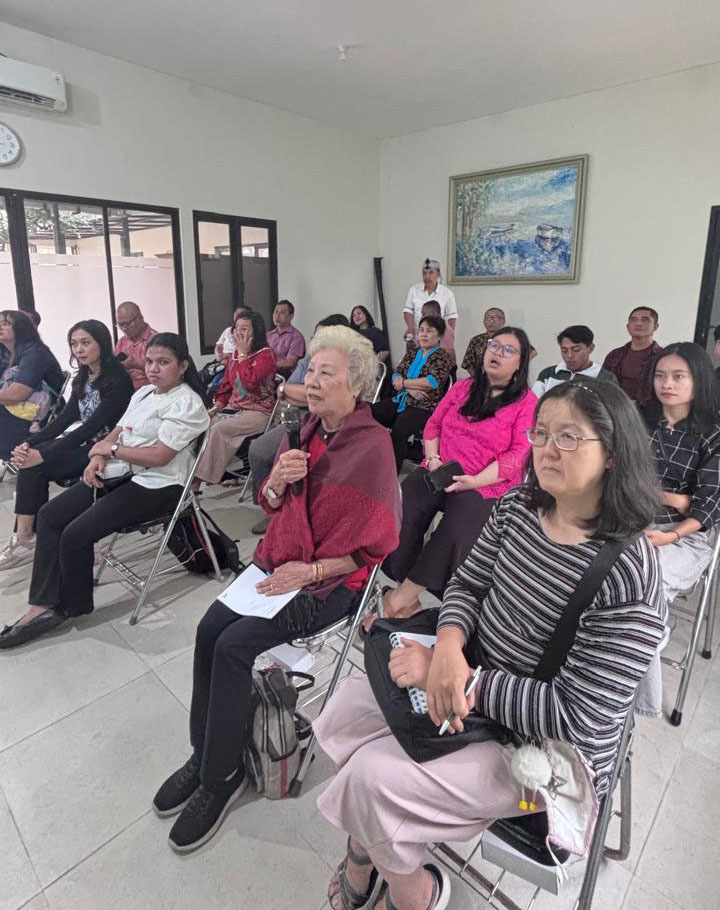
This Community Service Program aims to empower the Deo Gratias Catholic Writers Community (KPKDG) in Malang through assistance in creating Smart Psychospiritual based on Digital Edutainment. This activity is motivated by the increasing mental health problems among teenagers and the community's low ability to integrate spiritual literacy with digital technology. The implementation method includes six stages of assistance, namely training in psychospiritual writing, training in edutainment-based teaching techniques, social media creation and optimization, as well as training in psychospiritual content creation and edutainment-based training content. All activities are carried out collaboratively among lecturers, students, and community members, employing a participatory and reflective approach. The results of the activities showed a significant increase in the knowledge, skills, and attitudes of community members. KPKDG successfully mastered psychospiritual writing techniques, created active social media accounts (Instagram and TikTok), and produced ten digital spiritual content pieces that showcased the values of faith, hope, and inner healing. This program fosters a new awareness that spiritual literacy can be a means of social therapy and a medium for spreading faith in the digital age. The program not only enhances community capacity but also establishes a model of faith- and technology-based empowerment to strengthen the mental health of young people and foster an adaptive spiritual culture amid the challenges of digitalization.
[Berdasarkan Kongres Asosiasi Perguruan Tinggi Katolik tahun 2024, kesehatan mental merupakan isu termutakhir yang harus ditanggulangi. Minimnya konten Rohani Katolik yang menunjukkan kepedulian terhadap kesehatan mental, menjadi permasalahan yang harus diselesaikan. Program Pengabdian kepada Masyarakat ini bertujuan memberdayakan Komunitas Penulis Katolik Deo Gratias (KPKDG) Malang melalui pendampingan pembuatan Smart Psychospiritual berbasis Edutainment Digital. Kegiatan ini dilatarbelakangi oleh meningkatnya permasalahan kesehatan mental remaja dan rendahnya kemampuan komunitas dalam mengintegrasikan literasi rohani dengan teknologi digital. Metode pelaksanaan meliputi enam tahap pendampingan, yaitu pelatihan menulis psikospiritualitas, pelatihan teknik mengajar berbasis edutainment, pembuatan dan optimalisasi media sosial, serta pelatihan pembuatan konten psikospiritual dan pelatihan konten pelatihan berbasis edutainment. Seluruh kegiatan dilakukan secara kolaboratif antara dosen, mahasiswa, dan anggota komunitas dengan pendekatan partisipatif dan reflektif. Hasil kegiatan menunjukkan peningkatan signifikan pada aspek pengetahuan, keterampilan, dan sikap anggota komunitas. KPKDG berhasil menguasai teknik menulis psikospiritual, memiliki akun media sosial aktif (Instagram dan Tiktok), serta memproduksi sepuluh konten digital rohani yang menampilkan nilai-nilai iman, harapan, dan penyembuhan batin. Program ini menumbuhkan kesadaran baru bahwa literasi rohani dapat menjadi sarana terapi sosial dan media pewartaan iman di era digital. Program ini tidak hanya meningkatkan kapasitas komunitas, tetapi juga melahirkan model pemberdayaan berbasis iman dan teknologi untuk memperkuat kesehatan mental remaja dan membangun budaya spiritual yang adaptif di tengah tantangan digitalisasi.]
Downloads
References
Blasius, P. (2019). Spirituality and job satisfaction among the Congregatio Mater Misericordiae brothers in Indonesia Province: Basis for psychospiritual enhancement. Jurnal Keperawatan Florence Nightingale, 2(1), 131–144.
Dewi, C. A., & Rahayu, S. (2024). Implementation of case-based learning in science education: A systematic review. Journal of Turkish Science Education, 20(4), 729–749. https://doi.org/10.36681/tused.2023.041
Eryanti, I., & Soebagyo, J. (2021). Bibliometric analysis of blended learning mathematics in scientific publications indexed by Scopus. Numerical Jurnal Matematika dan Pendidikan Matematika, 9(1), 91–102. https://doi.org/10.25217/numerical.v5i2.1673
Ghio, L., Gotelli, S., Marcenaro, M., Amore, M., & Natta, W. (2014). Duration of untreated illness and outcomes in unipolar depression: A systematic review and meta-analysis. Journal of Affective Disorders, 152–154, 45–51. https://doi.org/10.1016/j.jad.2013.10.002
Hallinger, P., & Kovačević, J. (2019). Science mapping the knowledge base in educational leadership and management: A longitudinal bibliometric analysis, 1960 to 2018. Educational Management Administration & Leadership, 49(1), 5–30. https://doi.org/10.1177/1741143219859002
Indradi, A. (2014). Menghipnotis Siswa dengan Edutainment. Malang: Alta Pustaka.
Islamiyah, K. K., Rahayu, S., & Dasna, I. W. (2022). The effectiveness of remediation learning strategy in reducing misconceptions on chemistry: A systematic review. Tadris Jurnal Keguruan dan Ilmu Tarbiyah, 7(1), 63–77. https://doi.org/10.24042/tadris.v7i1.11140
Koh, C., Tan, H. S., Tan, K. C., Fang, L., Fong, F. M., Kan, D., Lye, S. L., & Wee, M. L. (2010). Investigating the effect of 3D simulation based learning on the motivation and performance of engineering students. Journal of Engineering Education, 99(3), 237–251. https://doi.org/10.1002/j.2168-9830.2010.tb01059.x
Laurentino, T. G., Scheller, M., Glover, G., Proulx, M. J., & Sousa, A. A. de. (2024). Thinking on your feet: Potentially enhancing phylogenetic tree learning accessibility through a kinaesthetic approach. Evolution Education and Outreach, 17(1). https://doi.org/10.1186/s12052-024-00215-y
Olaya, B., Pérez-Moreno, M. A., Bueno‐Notivol, J., Gracia‐García, P., Lasheras, I., & Santabárbara, J. (2021). Prevalence of depression among healthcare workers during the COVID-19 outbreak: A systematic review and meta-analysis. Journal of Clinical Medicine, 10(15), 3406. https://doi.org/10.3390/jcm10153406
Perang, B. (2022). Meningkatkan psikospritual perawat dengan pengukuran Assessment of Spirituality and Religious Sentiments (ASPIRES). J. Ilm. Kesehat. Sandi Husada, 343–350.
Perang, B., & Firmansyah, M. R. (2024). Psikoedukasi dampak penggunaan gadget pada perkembangan psikososial Loving Children Choir of Mamajang Makassar. Abdimas Galuh, 6(2), 1635–1642.
Remes, O., Mendes, J. F., & Templeton, P. (2021). Biological, psychological, and social determinants of depression: A review of recent literature. Brain Sciences, 11(12), 1633. https://doi.org/10.3390/brainsci11121633
Saputra, A. W. (2019a). Laman WordPress sebagai media belajar dalam kegiatan ekstrakurikuler menulis di era digital. Widya Warta, 2(02).
Saputra, A. W. (2019b). Meneroka Pendidikan 5.0. Malang Post-Opini.
Saputra, A. W. (2019c). Penyusunan laman menulis berita untuk kegiatan ekstrakurikuler jurnalistik SMA. KLAUSA (Kajian Linguistik, Pembelajaran Bahasa, dan Sastra), 3(2), 89–97. https://doi.org/10.33479/klausa.v3i02.246
Saputra, A. W. (2024). Menjadi Etnografer Transmanusia untuk Penelitian Humaniora Multisemesta. KLAUSA (Kajian Linguistik, Pembelajaran Bahasa, dan Sastra), 8(2), 45–63. https://doi.org/10.33479/klausa.v8i2.1102
Saputra, A. W., & Meilasari, P. (2020). Eksistensi komunitas kampung pentigraf sebagai komunitas cyber sastra di Indonesia. Prosiding Seminar Nasional Bahasa dan Sastra Indonesia (SENASBASA), 4(1). https://repositori.ukwms.ac.id/id/eprint/37079/
Vaicondam, Y., Sikandar, H., Irum, S., Khan, N., & Qureshi, M. I. (2022). Research landscape of digital learning over the past 20 years: A bibliometric and visualisation analysis. International Journal of Online and Biomedical Engineering (Ijoe), 18(08), 4–22. https://doi.org/10.3991/ijoe.v18i08.31963
Downloads
Published
Issue
Section
License
Copyright (c) 2025 PERDIKAN (Journal of Community Engagement)

This work is licensed under a Creative Commons Attribution-NonCommercial 4.0 International License.
In order for PERDIKAN to publish and disseminate research articles, we need publishing rights. This is determined by a publishing agreement between the author and PERDIKAN. This agreement deals with the transfer or license of the copyright to PERDIKAN and authors retain significant rights to use and share their own published articles. For both subscription and open access articles, published in proprietary titles, PERDIKAN is granted the following rights:
- The right to provide the article in all forms and media so the article can be used on the latest technology even after publication.
- The authority to enforce the rights in the article, on behalf of an author, against third parties, for example in the case of plagiarism or copyright infringement.
Copyright aims to protect the specific way the article has been written to describe an experiment and the results. PERDIKAN is committed to its authors to protect and defend their work and their reputation and takes allegations of infringement, plagiarism, ethic disputes and fraud very seriously.
If an author becomes aware of a possible plagiarism, fraud or infringement we recommend contacting their PERDIKAN publishing contact who can then liaise with our in-house legal department. Note that certain open access user licenses may permit
1.png)